
At MI Skin Dermatology Center, determining the best treatment for brown spots on your face starts with identifying the exact type of pigmentation you have—because not all dark spots are the same. Several factors, including sun damage, hormones, benign growths, or moles, can cause brown spots on your face. Therefore, the safest and most effective treatment depends on the underlying condition.
What Causes Brown Spots on Your Face?
The most common causes for brown spots on the face include sun exposure, hormonal changes, genetics, and natural aging. These spots may appear as age/sun spots, freckles, melasma, or other pigment conditions, and each requires a slightly different treatment approach.
Typical concerns include:
- Sun spots (solar lentigines): Flat, darker areas caused by cumulative UV exposure
- Melasma: Patchy pigment triggered by hormones and sunlight
- Freckles: Genetic pigment that darkens with sun exposure
- Seborrheic keratosis: Benign, slightly raised growths that can resemble age spots but have a “warty” or bumpy texture
- Dermatosis papulosa nigra (DPN): Small, benign, elevated growths commonly seen on the skin in people with skin of color
- Moles (nevi): Collections of pigment-producing cells that sometimes require monitoring
Because some pigmented lesions can resemble early skin cancers, identifying the correct diagnosis is the first and most important step we take before pursuing cosmetic treatments.


Why Is It Important to Identify the Type of Pigmentation First?
Identifying the type of pigmentation first is essential because the best treatment for brown spots depends entirely on the underlying cause. Treating melasma, for example, requires a very different strategy than treating sun spots or seborrheic keratoses.
When patients visit MI Skin Dermatology and Laser Center, Dr. Isaac and her team evaluate several factors:
- Type and depth of pigmentation
- Skin tone and sensitivity
- Whether the pigment is hormonal, sun-related, or structural
- Treatment goals and downtime
This personalized evaluation allows us to recommend the safest and most effective treatment for your needs.
What Are the Best Laser Treatments for Brown Spots?
Laser and light-based therapies are highly effective for many types of brown spots and facial pigmentation.
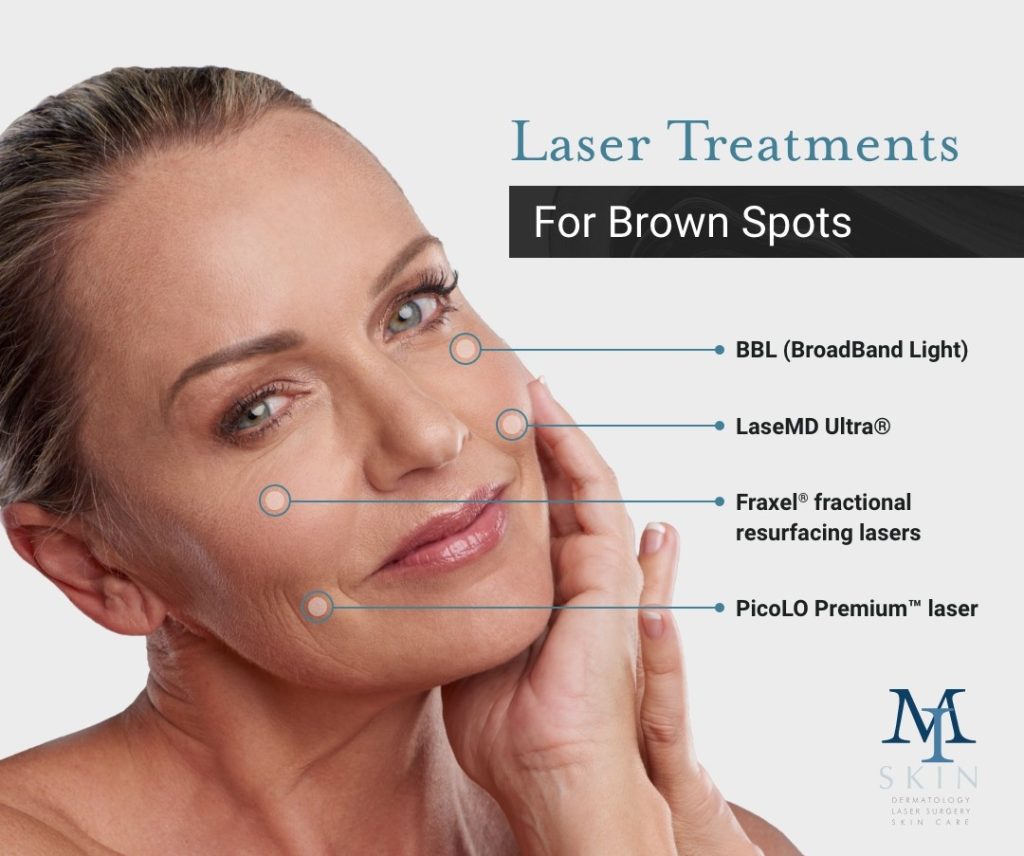
At our Washington, DC, dermatology practice, we perform advanced laser and light-based treatments, including:
- BBL (BroadBand Light): Targets sun damage, freckles, and age spots
- LaseMD Ultra®: Improves pigmentation and overall skin tone
- Fraxel® fractional resurfacing lasers: Stimulate collagen while reducing pigment irregularities
- PicoLO Premium™ laser: Breaks up stubborn pigment particles with minimal downtime using pico-second laser light
These technologies allow us to customize treatments for different skin tones and pigment conditions while minimizing risks such as post-inflammatory hyperpigmentation or discoloration.
How Are Seborrheic Keratosis and DPN Treated?
Not all brown spots require lasers. Some benign growths, including seborrheic keratoses and dermatosis papulosa nigra (DPN), are typically removed with simple in-office procedures, which may include:
- Electrocautery
- Laser removal (C02 or Picosecond laser)
- Snip excision
- Cryotherapy
For DPN, the procedure is usually quick and cosmetic, with approximately 4 to 7 days of minimal downtime as the treated spots heal.
When Should You See a Dermatologist for Brown Spots?
You should see a dermatologist if you want to improve the appearance of sun spots, age spots, or uneven skin tone. If you notice new, changing, or irregular dark spots, we also urge you to visit us for a medical dermatology evaluation to rule out skin cancer. At MI Skin Dermatology Center, we have the expertise to safely treat facial brown spots with advanced, targeted procedures.
Take the next step toward better skin health and confidence by requesting a dermatology consultation in Washington, DC. Complete the online form or call us at (202) 393-7546 to schedule an appointment.
Leave a Reply