
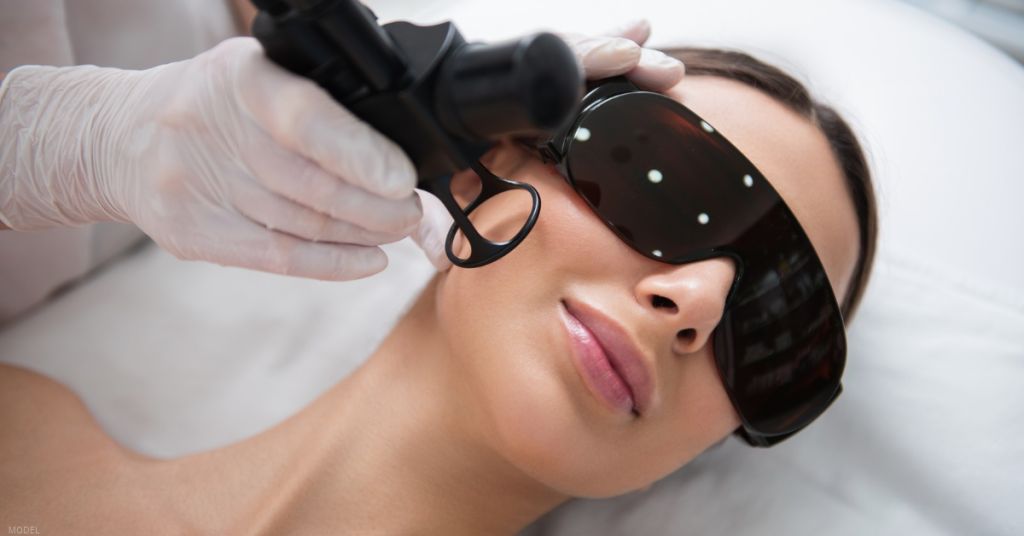
When patients at MI Skin Dermatology Center ask, “How often should I get laser skin resurfacing?”, my answer depends on the laser and the concern you’re treating: a deep fractional CO2 treatment is often a one-time procedure, while gentler lasers work best as a series spaced weeks apart.
As a 20-year member of the American Society for Laser Medicine and Surgery, I’ve performed more than 17,000 laser resurfacing treatments for discoloration alone throughout my career, and that experience helps me match the right device to your skin. My team and I then build a well-planned schedule around it, delivering smoother, brighter, more even-toned skin without unnecessary sessions or more downtime than your life allows.


What Is a Typical Laser Skin Resurfacing Schedule?
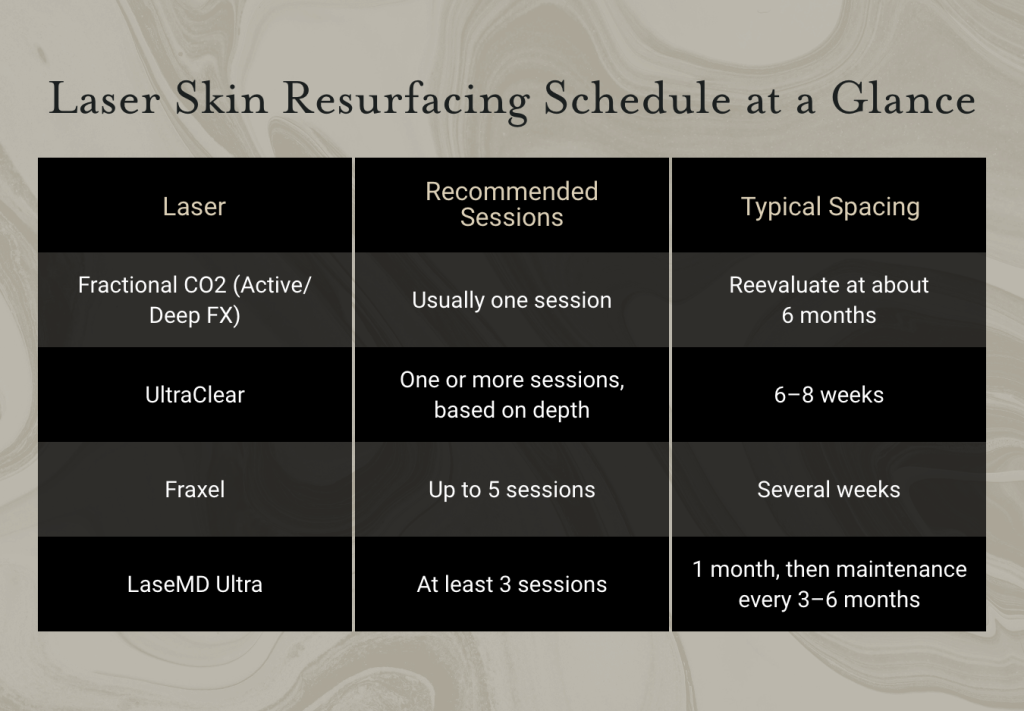
A typical laser skin resurfacing schedule is either a single deep ablative treatment or a series of 3 to 5 gentler treatments spaced about 4 to 8 weeks apart.
- Deeper resurfacing means fewer sessions but more downtime.
- Gentler resurfacing means more sessions with little interruption to your routine.
Many patients continue with periodic maintenance treatments to protect their results. I also use non-laser resurfacing devices such as Tixel® and Opus Plasma® when they might address a concern more effectively than a laser.
How Many CO2 Laser Treatments Are Needed?
Some patients need only one powerful, fractional CO2 treatment, because Active/Deep FX pairs two CO2 lasers to treat the skin’s surface and its deeper layers in a single session.
- UltraClear®, which I offer alongside my CO2 laser, offers adjustable depth, so I space lighter treatments about 6 to 8 weeks apart.
- After deeper treatments, collagen remodeling continues for 3 to 6 months. I typically reevaluate the skin at about 6 months before recommending a second session.
Because CO2 resurfacing involves dedicated time for healing, I encourage patients to review this day-by-day CO2 laser recovery timeline before scheduling.
How Many Non-Ablative Laser Treatments Are Needed?
Non-ablative lasers like LaseMD Ultra® and Fraxel® usually require 3 to 5 treatments because they renew skin beneath the surface without removing the outer layer.
- LaseMD Ultra: Ideal for superficial pigmentation, early signs of aging, and ongoing maintenance. I recommend at least 3 treatments spaced 1 month apart, followed by maintenance every 3 to 6 months.
- Fraxel: Some patients see results after a single session, but up to 5 treatments may be appropriate when deeper resurfacing is needed.
There’s never a one-size-fits-all approach. Every treatment at MI Skin is tailored to your unique needs.
How Many Laser Sessions Are Needed for Acne Scars?
Acne scars usually require a series of laser sessions, and the right number depends on the scar type, depth, and skin tone, rather than a fixed package.
- Active/Deep FX and UltraClear treat acne scarring. Deeper scars may need a second treatment once the skin has fully remodeled.
- LaseMD Ultra, Fraxel, and PicoLo Premium™ can treat scarring as a series with less downtime.
If breakouts are still active, I bring devices in earlier to calm inflammation and fade lingering red and brown marks. Acne is rarely an isolated problem; I treat it as a multifactorial concern and may combine lasers with other procedures to help you achieve the best results.
How Long Is the Downtime After Laser Resurfacing?
Laser resurfacing downtime ranges from about a day of pinkness with LaseMD Ultra to roughly a week of peeling after fractional CO2.
- LaseMD Ultra: Skin is pink on day 1, then flakes for a few days.
- UltraClear: Light treatments involve minimal downtime, while the most intensive UltraClear treatments require 5 to 10 days of social downtime.
- Fraxel: About 5 to 7 days of social downtime.
- Fractional CO2: Peeling largely subsides by the end of the first week, and the remaining pinkness fades over the following 2 to 3 weeks.
After any resurfacing treatment at MI Skin, I recommend protecting your results with a broad-spectrum sunscreen of SPF 30 or higher.
What Is the Best Time of Year for Laser Resurfacing?
Fall and winter are the best times of year for laser resurfacing because lower UV exposure makes it easier to protect healing skin. Starting in late fall also leaves time to complete a full series before spring, one reason I often recommend scheduling laser treatments in winter.
Ready To Build a Laser Plan Around Your Skin and Timeline?
The best laser skin resurfacing schedule is tailored to your concerns, skin type, and the downtime you can realistically manage. If you’re still weighing options, this quick quiz on which laser treatment suits you is a helpful starting point for your consultation.
To create a personalized plan for glowing skin, request a consultation or call MI Skin Dermatology Center in Washington, D.C., at (202) 393-7546.
Leave a Reply